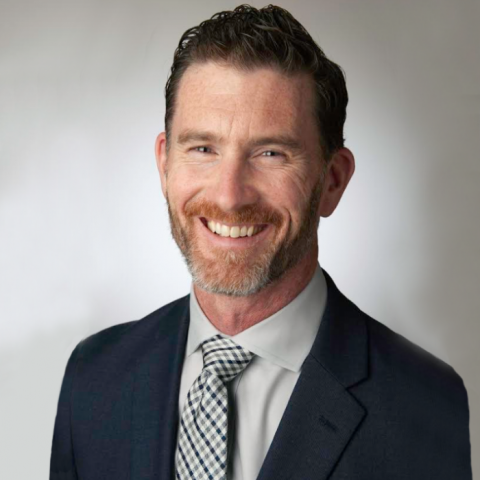
The Playbook Behind The Surgical Practice
He may have been an All-American in college, but in the operating room, he sees himself more as coach than star player
.“Most of what we do as orthopedic surgeons is not quarterbacking,” says Dr. Thomas A. McDonald. “It’s less athlete, more part of a larger team. A lot of what we do is advisory,” he tells Dr. Palanca in a recent episode of The Step™, Enovis Foot & Ankle’s podcast where surgeons, athletes, and patients learn from each other to improve both the patient and surgeon experience.
“Occupational athletes, industrial athletes, septuagenarian athletes. They may not be setting records in speed or endurance, but they’re profoundly motivated to get back to what defines their identity”
Some competitors are naturally gifted. But most teams, he says, are made up of players “who want to be part of something bigger than themselves. It’s about belonging.”
The Patient As Everyday Athlete
Dr. McDonald views all his patients, whether they play competitive sports or spend their workday on their feet, as athletes.
“Occupational athletes, industrial athletes, septuagenarian athletes. They may not be setting records in speed or endurance, but they’re profoundly motivated to get back to what defines their identity,” he says.
“Who’s more motivated than a single mother of three trying to get back to work after an ankle injury?”
Sideline Moments That Shape Surgeons
The best coaches teach more than the playbook. They cultivate communication, trust, and teamwork.
“Patients want a plan,” he says. “They want to know someone has a downfield vision, and that the whole team around them is aligned toward a common goal.”
That only works when the care team itself is tightly connected. He regularly brings in colleagues to round out the picture. “I’ll ask the physical therapist, ‘What have you been noticing these last six weeks?’ Staying connected to those team members has fundamentally changed the way I practice,” he says.
“Patients want a plan. They want to know someone has a downfield vision, and that the whole team around them is aligned toward a common goal.”
Just like on the field, coaching doesn’t stop when the play is over, Itit shapes how surgeons continue learning long after the last whistle. “When I look back, the most important moments of my own education happened on the sidelines—talking to a mentor or colleague, sharing those behind-the-scenes moments in patient care that keep us up at night.”
Dr. Palanca echoes that sentiment. Candid exchanges with fellow surgeons, she says, have shaped some of the most meaningful evolutions in her own practice.
Playing the Long Game
The athlete mindset can be a good blueprint for recovery. “They’re used to having a goal and doing whatever’s necessary to reach it,” he says. But most patients aren’t elite competitors.
“Tapping into what motivates each patient is really helpful.”
Recovery rarely follows a straight line. Dr. McDonald tries to craft a plan that aligns with both the medical timeline and the patient’s reality: their calendar, their lifestyle, their headspace.
When goals are overly optimistic, he breaks them down into achievable pieces. “I might say, ‘This week, I want you to focus on this one thing,’” he says.
After two decades in practice, one challenge still feels central. “I’m really interested in how I can communicate better,” he says. “That’s the hardest part of the job.”
The Love of the Game
His advice to a younger surgeon on a similar path?
“Relax, and enjoy every moment,” he says. “There’s a lot of joy in simply talking with someone and helping them make decisions.”
To hear the full episode—including why Dr. McDonald likes to have breakfast with patients—watch: Coaching Every Patient Like an Athlete.
The Step™ is available wherever you get your podcasts.
Explore our foot & ankle portfolio or connect with a representative to learn more.