Career Kickoff
First came the Jones fracture—a break in the fifth metatarsal known for its stubborn healing. Then, while playing center midfielder for the University of South Carolina, came the triple whammy: ACL, MCL, and meniscus injuries.
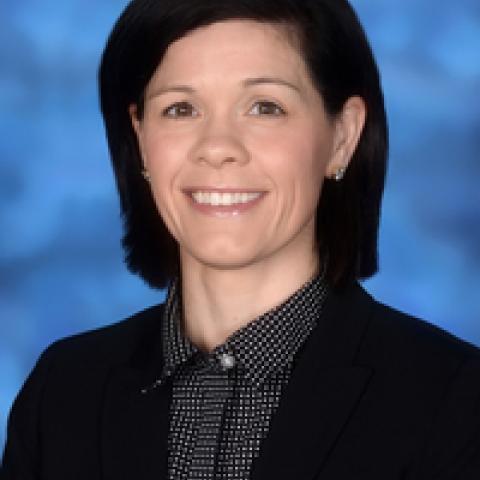
It was the end of her soccer career. But for Dr. Corine L. Creech, now a foot and ankle surgeon at Inova Medical Group Podiatric Surgery, it was also the start of a new path—one shaped by her own surgical recoveries and rehab.
“Looking back with what I know now, we don’t pay enough attention to how significant these injuries are for our young patients,” Dr. Creech tells Dr. Ariel Palanca in a recent episode of The Step, Enovis Foot & Ankle’s podcast where surgeons, athletes, and patients learn from each other to improve both the patient and surgeon experience.
“I always have to avoid treating the 18-year-old version of myself. I need to give patients information so they can make the right decision for themselves.”
That begins with putting herself back in the patient’s shoes. “For me as a patient, being heard mattered. So now, as a physician, it’s important for me to listen—even if it doesn’t change the diagnosis or treatment plan.”
Seeing Patterns Early
Recovering from a right-foot fracture only to suffer a left-knee injury a year later, Dr. Creech can’t help but wonder about larger patterns at play.
“You have one side that’s injured and rehabs, and then the other side goes,” she says. “It’s probably not a coincidence to have a contralateral leg injury the following year.”
“It goes back to really developing a relationship—figuring out which type of patient you’re dealing with. What’s the personality behind it?”
The field has come a long way—but has to make up ground—in understanding these kinds of dynamics. “Particularly for female athletes, we’ve known, or at least speculated, for so long about Q-angles, menstrual cycles, and hormonal factors with knee injuries,” she says.
Knowing When to Push—and When to Be Patient
Every surgeon knows the two archetypes: patients who may need to slow down, and those that might need to pushed to take the next step. How can surgeons gauge that to navigate the route to recovery?
“It goes back to really developing a relationship—figuring out which type of patient you’re dealing with. What’s the personality behind it?” she says.
“The patient who comes in after an Achilles repair, not wearing their boot two weeks post-op… that’s when you have to be stern. You’ve invested so much into this—you’ve got to let me guide you.”
For those patients, she prints protocols, sets expectations, and doesn’t shy away from drawing a firm line. “True story: I had a patient who was an ultramarathon runner. He ran 100-mile races. On mile 88, his right calf muscle started to get sore, and he was in my office asking me what I could do.”
In every case, tough love is what the doctor ordered. “When you’ve been kind—hugs, smiles, real partnership—then when you lay down the law, maybe the juxtaposition makes them listen a little better.”
Athletes in Residence
Residents with an athletic background seem to thrive.
“In life—but particularly athletics—not everything goes smoothly,” she says. “During residency training, initially you’re going to be bad at a lot more things than you’re good at. You have to be comfortable being uncomfortable. I think athletes have that mindset.”
Beyond the Scan
With patients now seeing their MRI results before the visit, anxiety often arrives before context. “You’ll get a portal message before you’ve even looked at the images—‘What does all this mean?’” Dr. Creech says.
She sets expectations early, and then reviews the images together, often via video, walking through each finding and matching it to the patient’s symptoms. “From the beginning, I usually tell patients what I’m looking for with the MRI.”
The Obligation to Our Patients
Reflecting on the conversation, Dr. Palanca noted that Dr. Creech’s way of asking patients questions like “What are you lacking?” and “What are you looking for here?”—and listening carefully—can have a profound impact.
“I really think that’s probably why you’re a wonderful doctor and a wonderful surgeon,” she said.
“We all have this huge obligation to our patients to hear them and to treat them. So much of the human experience is understanding—or at least trying to understand—where people are coming from,” said Dr. Creech.
Drs. Creech and Palanca are paid consultants at Enovis.