Training Never Stops
Once you’re settled into practice, change becomes more complicated.
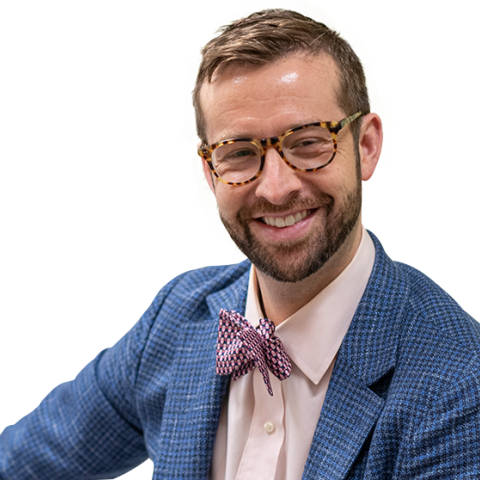
“You always hear that half of what you’re learning you won’t be doing in 10 years,” says Dr. Christopher E. Gross, Professor of Orthopaedic Surgery and Director of Foot & Ankle at the Medical University of South Carolina.
“Now that I’m 10 years in—my attendings were right,” he tells Dr. Palanca in a recent episode of The Step(TM), Enovis Foot & Ankle’s podcast where surgeons, athletes, and patients learn from each other to improve both the patient and surgeon experience.
For Dr. Gross, minimally invasive surgery was the first major turning point. It hadn’t been part of his training, so when it suddenly entered the specialty, he had to build his own pathway, learning through cadaver labs—and lots of practice.
“For the first time, you’re practicing without any real instructions from your instructors—because they’re learning at the same time you are,” he says. “It was daunting at first, I’m not going to lie.”
How Surgeons Decide What’s Worth Trying
Dr. Gross continuously scans for new trends and ideas but he’s selective about those he adopts. He trusts companies with strong track records—especially those whose implants or materials (like Nitinol) he has used successfully.
“I want to be an early adopter with products and companies I trust. I’m more gung-ho about being the first or among the first to try that technology.”
Once he sees that initial outcomes with a new technology or procedure have been favorable, “I’ll aggressively incorporate it into my practice,” he says.
Dr. Palanca takes a similar approach in her practice. “If you don’t currently have a good solution or technique for something, or you’re not happy with your results…that might push me to be an earlier adopter for a new technique or technology.”
AI Enters the OR
Dr. Gross and Dr. Palanca are always looking to the horizon. Like those in many industries, they see artificial intelligence.
Dr. Gross is currently developing an AI-powered limb risk assessment calculator. The model predicts the likelihood of toe, transmetatarsal, or below-knee amputation—and even mortality—based on variables such as A1C history and prior cellulitis.
“If I can say, ‘Based on your profile, this is what we’re predicting over five years,’ that’s powerful,” he says.
Will AI replace surgeons? Not necessarily any time soon, he says, but it can sharpen decision-making and improve how surgeons communicate risk.
Orthopedic surgery is increasingly incorporating robotic elements and enabling technologies. “There will always be a human behind the computer to make the patient feel safe, but there will be a day when robots plus AI render some of what we do obsolete,” he says.
Surgical Pain Points As Entry Points
How can surgeons who are deep into their careers—and perhaps set in their ways—consider adopting new technology? They can start by asking themselves: What are the pain points in your practice? And where does current technology fail you?
“If they list three pain points, and there are newer technologies or techniques that address those, that’s an easy entry point,” Dr. Gross says.
When the pain points are on both sides of the saw, so to speak—when both surgeon and patient are dissatisfied—”Those are no-brainers,” Dr. Palanca says. “You should seek out other ways to do those surgeries.”
To hear the full episode—including more of Dr. Gross and Dr. Palanca’s perspectives on when and how to adopt new tools and techniques—watch: When to Say Yes (Or No) to New Technologies.
The Step™ is available wherever you get your podcasts.
Explore our foot & ankle portfolio or connect with a representative to learn more.