


DynaNail® TTC Fusion System
Sustained Dynamic Compression for TTC Fusions

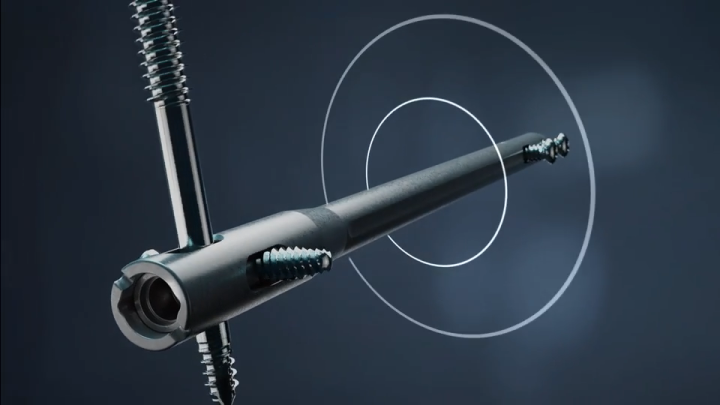
The DynaNail® TTC Fusion System is engineered specifically for tibiotalocalcaneal (TTC) fusions, addressing degenerative conditions, joint deformities, and revision procedures with unique technology that adapts to the body throughout the healing process.
Powered by Enovis™ patented pseudoelastic NiTiNOL technology, the DynaNail® TTC Fusion System provides up to 8mm of sustained dynamic compression, optimizing biomechanical stability while promoting higher fusion rates and faster time to fusion.1,2,3,4 Unlike static implants that lose compression over time, DynaNail® continuously responds to bone resorption, reducing the risk of nonunion and enhancing long-term outcomes.5,3
Learn more about the power of NiTiNOL.
Download the Surgical Technique Guide
TTC Fusion System- Overview
- Videos
- Related Products
- Documents
- References

Maintained Compression Without External Fixation? Nailed It
The DynaNail® TTC Fusion System is the only proven fusion approach that offers the compression performance of an external fixator inside an intramedullary nail.
- Delivers up to 8mm of sustained dynamic compression, plus an additional 6mm of manual intra-operative compression1
- Ensures automatic dynamization upon weight-bearing
- Paired with the durable DynaFrame™ CF (Carbon Fiber) Deployment System
- Available in a range of diameters and lengths, including 180mm, 220mm, 260mm, and 300mm
Demonstrated Elite Performance
The compression-sustaining DynaNail® TTC Fusion System is compatible with femoral head allografts, 3D-printed bulk spacers, and adjunctive fusion procedures like triple arthrodesis.
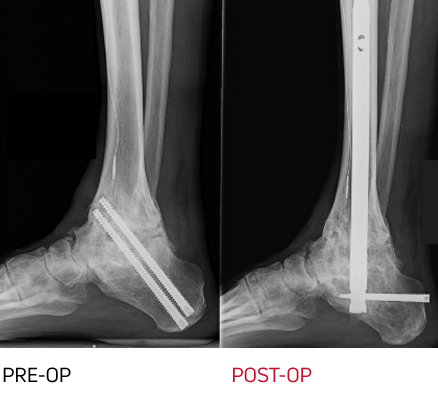
Non-Unions from Prior Arthrodesis
Images Courtesy of:
Dan Latt, MD, Tucson, AZ
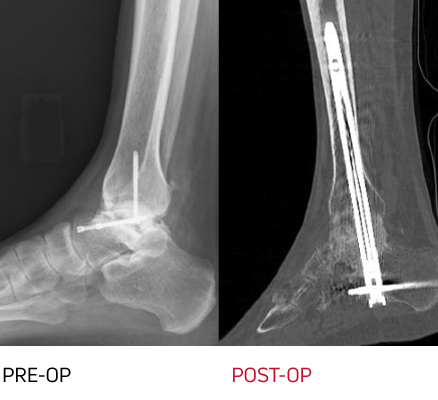
Large Bony Defects - Absent Talus
Images Courtesy of:
Tom SanGiovanni, MD, Coral Gables, FL
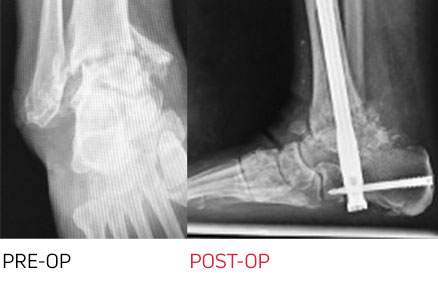
Charcot Foot
Images Courtesy of:
Jeffrey Covell, MD, Danville, KY
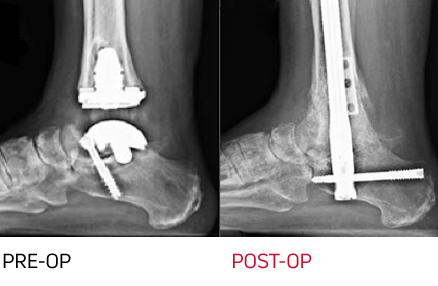
Failed Total Ankle Replacement
Images Courtesy of:
Mark Conklin, Golden, CO
The Proof Is In The Science
Maintained Active Compression
Benchtop testing shows that the DynaNail® can maintain compression for up to 8mm of bone resorption or settling, similar to an external fixator.1 In contrast, existing static IM nails, including other internal compression nails, lose 90% of their compression when just 1 mm of bone resorption occurs.5,6

Immediate Dynamization
Thanks to the axial compliance of its NiTiNOL compressive element, DynaNail® is able to transfer almost 70% of forces to the bone during weight-bearing; whereas, static competitor nails are only able to transfer 20% of walking forces.7

MKT-FA26-0052 Rev A
DynaNail Animation

DynaNail® TTC Patient Testimonial - Dave

DynaNail® TTC Patient Testimonial - David


Instructions for use:
- Data on File. Enovis. 2026
- Pitz, MK (2011). Compression-Aided Stability of Orthopaedic Devices [Master’s Thesis]. Georgia Institute of Technology.
- Chundi G, Dawar A, Ahn DB, et al. Use of Sustained Compression to Mitigate Nonunion in Tibiotalocalcaneal Arthrodesis: A Propensity Score-Matched Nationwide Readmissions Database Analysis. J Am Acad Orthop Surg, 2025. doi:10.5435/JAAOS-D-25-00011.
- Steele JR, Kildow BJ, Cunningham DJ, Dekker TJ, DeOrio JK, Easley ME, Nunley JA, Parekh SG, Adams SB. Comparison of Tibiotalocalcaneal Arthrodeses Using Sustained Dynamic Compression Nail Versus Nondynamized Nails. Foot Ankle Spec, 2020; (13)3: 193-200.
- Hsu AR, Ellington JK, Adams SB, Jr. Tibiotalocalcaneal Arthrodesis Using a NiTiNOL Intramedullary Hindfoot Nail. Foot Ankle Spec 2015; 8(5): 389-96.
- Yakacki CM, Gall K, Dirschl DR, Pacaccio DJ. Pseudoelastic intramedullary nailing for tibio-talo-calcaneal arthrodesis. Expert Rev Med Devices 2011; 8(2): 159-66.
- Terrill, P et al. Effect of intramedullary nail stiffness on load-sharing in tibiotalocalcaneal arthrodesis: A patient-specific finite element study. PLOS ONE 18(11): e0288049. https://doi.org/10.1371/journal.pone.0288049.